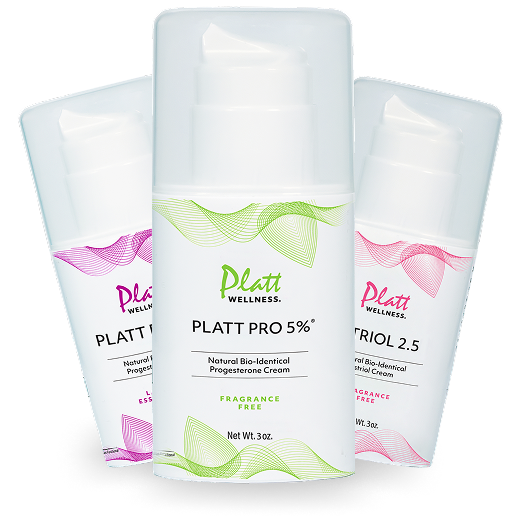
Many people ask whether they should use oral progesterone or cream.
You lose approx 80 to 90% efficacy when you take oral going through the first pass of the liver and is converted into allopregnanolone - a derivative of progesterone. It is recognized on a lab test as progesterone, but is not able to attach to progesterone receptor sites easily. It causes drowsiness, which is why they recommend taking it at night.
The cream, however, enters your bloodstream and bypasses the liver and absorbs in minutes.
Orally administered hormones are first metabolized by the liver before entering the systemic circulation, and metabolites are excreted in the bile and urine.
Transdermally administered estrogen or progesterone avoids this first-pass metabolism and can therefore be given in lower doses for equivalent physiologic effects.
Given the emerging evidence from observational studies regarding the safety profiles of menopausal hormone therapies, the transdermal route may be the preferred option.
Click here for the study.
It is important to differentiate between natural, bio-identical progesterone and synthetic progestogens. Bio-identical progesterone is identical to the progesterone produced in the body. Progestogens are synthetic, and are the ones that are found in birth control pills, hormonal IUD's, and drugs like Provera. Progesterone receptors will not transport progestogens to the nucleus of a cell and thereby they can never duplicate the action of natural progesterone. They are also responsible for almost 100% of the listed side effects attributed to synthetic progesterone.
In addition, BHRT typically stays in your system for 6 hours. Using the creams throughout the day i.e., am and pm allows you to benefit from hormone replacement throughout the day.